
The First Step Toward Precision with HPR260XD (2012)
- Armands Sakne
- Oct 21, 2025
- 4 min read

In 2012, the effects of the economic crisis were still visible in Latvia. Many metal fabrication companies realized they could no longer rely on the local market. The only way forward was export. Those who made that decision back then are still operating today. Many others, who stayed focused only on the domestic market, unfortunately are not.
One of my first clients at that time was a small steel structure manufacturer aiming to enter the Swedish market. They were using a plasma cutting machine made in Turkey, equipped with a Hypertherm HPR260XD. The Swedish construction market demanded extremely high accuracy and consistent hole quality. Buying a new machine was financially impossible, so we had to find a way to achieve these results with what they already had.
Where the Experiment Began
I was invited to a meeting because I was supplying consumables for their system. During the discussion, the real issue surfaced: the quality of the holes.
I had just started learning about Hypertherm’s integrated technology solutions and understood that hole quality is determined by the balance between kinetic and thermal energy.
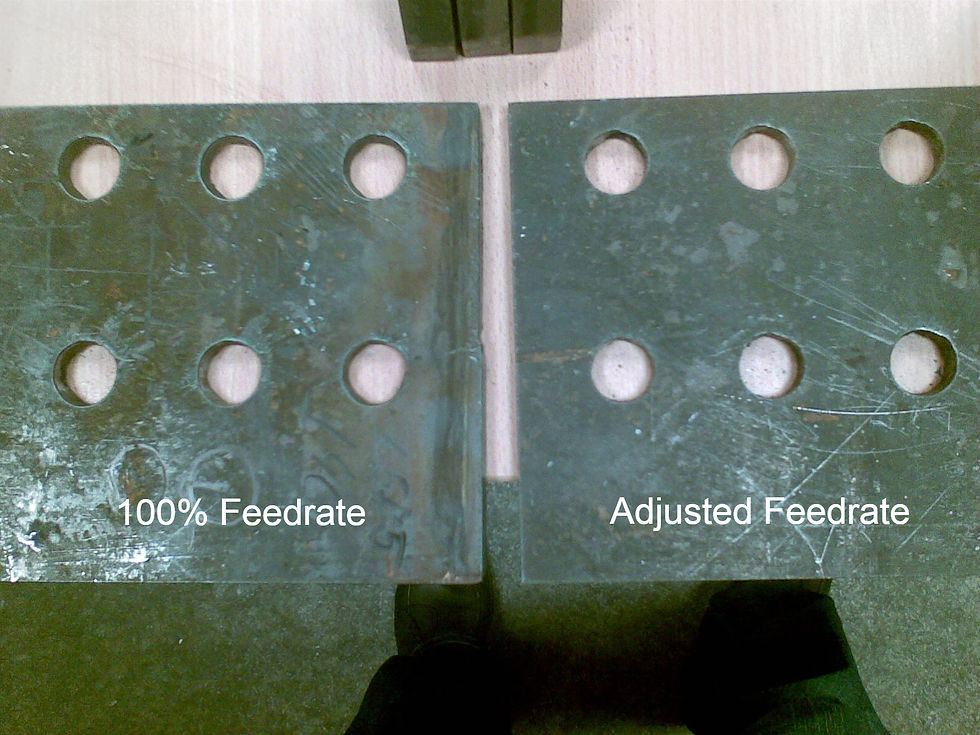
It was standard practice to set one cutting speed at the beginning of the program and use it for the entire part. I began experimenting with the idea of assigning an individual feedrate for each hole directly in the NC code.
Some OEMs offered a simple option to reduce cutting speed for internal contours by a fixed percentage for all parts and all hole diameters within a given material thickness. But none of them allowed assigning an individual feedrate for each hole.
I was able manually adjust the feedrate before every hole in the NC code and the results surprised me. Hole geometry improved drastically. The walls became more cylindrical and smooth, and thermal distortion dropped significantly.
From Manual Tuning to Automation
Of course no operator would ever manually change the NC code for every hole. The next logical step was to automate this process.
That was when I introduced my client to Hypertherm ProNest and sold my first ProNest nesting license.
At that time ProNest was one of the first software systems on the market offering a post-processor with a built-in parameter database. It contained optimized feedrate and pierce settings for every possible material thickness and hole diameter. This was an enormous amount of data that no human could practically maintain or adjust manually.
This was not yet True Hole technology, since cutting was still done with O₂/Air, but it was already a major leap forward. For the first time, the program itself began to manage the energy balance, and hole quality became consistent and repeatable.
Why This Still Matters Today
Why am I writing about this after 13 years? Because even today, while auditing and researching various companies, I see that very few truly understand these principles. And these are the fundamental questions of plasma cutting, especially when it involves holes.
Many companies keep changing machines, service providers, or suppliers, investing large sums into new equipment, yet their process stability does not improve. They still do not fully understand how energy behaves during cutting or how the interaction of motion, gas flow, and heat defines the final geometry.
The same cycle repeats over and over: moving from one capital investment to another without mastering the fundamentals.
Different Systems, Different Logic
Today almost every plasma cutting machine manufacturer offers its own post processor database for hole cutting. Each system uses a different logic, structure, and set of parameters.
This is an important factor to consider when purchasing a new machine. The same NC program can produce completely different results depending on how the database interprets the cutting parameters.
In many cases companies compare only the visible aspects of the machine such as table size, power source, or price, but forget to evaluate the post processing intelligence behind it.
A well designed post-processor defines how the machine behaves during cutting. It determines how the feedrate changes, what gas mix used, how pierce height and delay are coordinated, and how thermal energy is managed from start to finish.
Understanding these differences is what separates a good investment from an expensive disappointment.
Bottom-Up Interaction
In this story, the most important part was not just the technical solution itself but the process of analysis. The result was not born from a manual or a theory. It came from practical interaction with the customer, from asking the right questions and observing carefully.
It was this bottom-up interaction that made the project successful. I can offer an outstanding product or the most advanced technology, but if I do not understand the customer’s real problem, it becomes a meaningless process and a waste of time for both sides.
Technology only makes sense when it solves a real, specific need. Back in 2012 it was not just about holes. It was about understanding how to connect people, process, and energy into one precise, working system.
And the story did not end there. Two years later, the same customer ordered a new 12-meter cutting machine with a Hypertherm HPR400XD and a full Hypertherm integrated technology package. That was more than a sale. It was proof of trust, showing that when the process is understood correctly, value is created for both sides.
Once the logic is understood, the process can be repeated endlessly with consistent results.
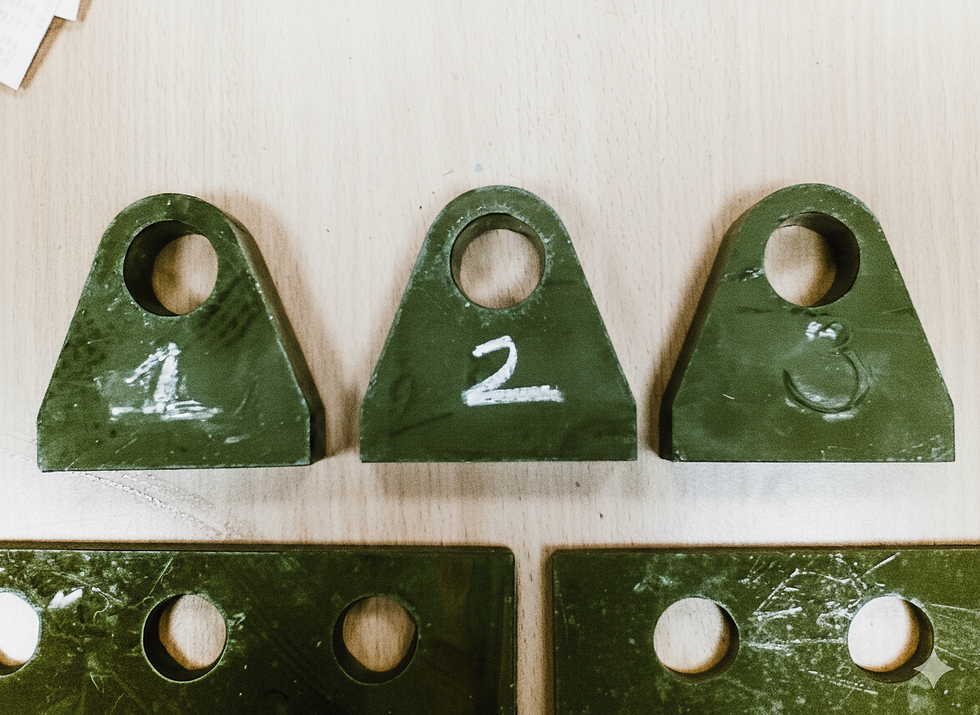
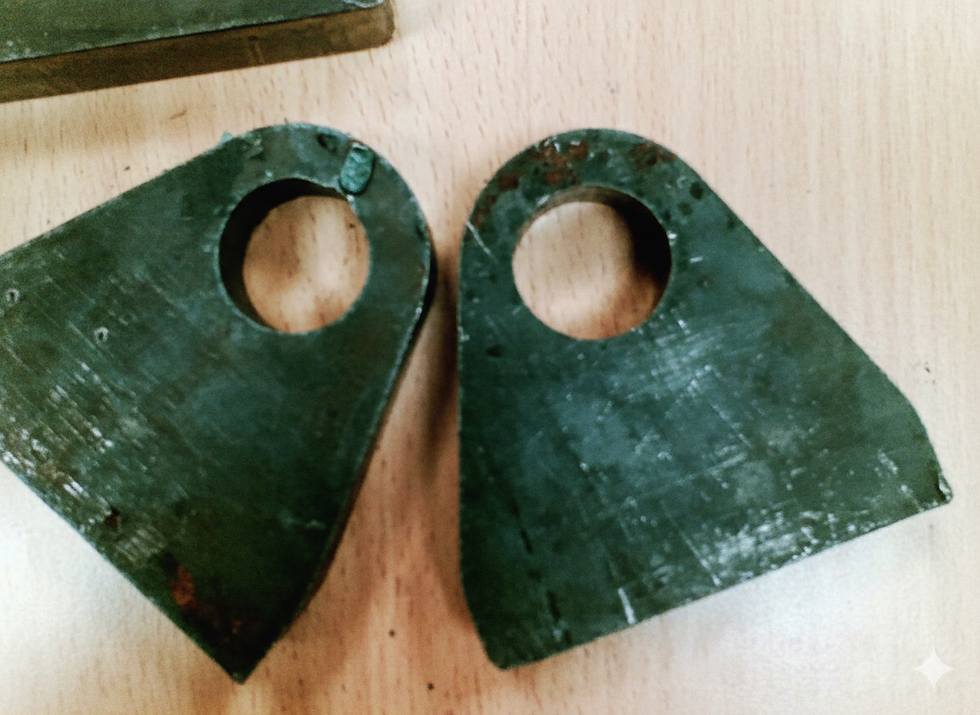
Test parts: 20mm thick mild steel 30mm bolt hole.




Comments