
The Crispy Bacon: A Structural Failure in OEM Service Organizations.
- Armands Sakne
- Feb 2
- 5 min read

Updated: Feb 5
Part 1.
The Experiment That Revealed the Problem.
An experienced Field Service Engineer, after years in the same OEM organization, decided to test whether his detailed service reports were actually read and used or just archived for compliance.
He changed nothing about the work quality, content, or procedures. The only alteration? He signed the internal OEM copies with the alias “Crispy Bacon”. Clearly absurd and impossible to miss.
When confronted:
“Why did you ruin the report with this signature?”
“Do you actually read them?”
“Of course.”
“Then you would have noticed it two and a half years ago.”
This is not a joke. It is empirical evidence of a deep structural flaw:
execution is happening, but organizational learning (function) is not.
Symptoms of the Larger Problem.
Field service turnover in manufacturing often ranges 24–32% annually (median ~28%), with production/technician roles frequently 30–38% (The Resource Company 2025 analysis + BLS JOLTS data).
Average tenure for field service technicians is 1–2 years (Zippia analysis of 74,000+ resumes); many installation technicians leave after 3–5 years due to limited growth and motivation.
Knowledge walks out the door repeatedly → costs rise → sales become harder in competitive markets.
What a Field Service Engineer Actually Sees in One Year
(≈ 30 customer sites in industrial CNC / plasma / laser environments)
Dimension | What the Field Service Engineer actually observes |
Own OEM machines | 30–60 machines with random configurations |
Competitor machines | 60–120 machines with alternative designs |
Production reality | Dust, vibration, temperature, operator behavior, maintenance discipline |
Recurring failures | 10–20 repeating root causes |
Design compromises | Acceptable on paper, failing after 12–24 months |
Configuration mismatches | 15% over-configured, under-configured, or 5% fundamentally wrong application fit. |
Software behavior | Every 6 machine sold with built in software bug. |
Problems resolved | 100–300 systemic issues per year |
Operator conversations | 60–120 unfiltered reality checks |
Production manager input | 30–60 talks on downtime and risk |
Owner / CEO exposure | 10–20 trust-critical moments |
Informal intelligence | Competitor price, delivery, flaws |
System-level signals | Design, sales, reality misalignment |
These numbers represent only a fraction of the real-time, unfiltered operational intelligence a seasoned field engineer gathers every year. Yet almost none of this rich, systemic insight ever appears in standard service reports.
The rigid templates and tick-box formats capture only isolated incidents and service or installation fixes.
Never patterns, root causes, customer relationships, or sales gaps. As a result, this valuable information never reaches the company databases in a usable form, so neither R&D nor Sales can analyze it, learn from it, or act on it. It simply stays locked in the engineer’s head, until he leaves.
The OEM Management View: Execution Over Function.
From the OEM leadership perspective, the ideal Field
Service Technician (FST) is a disciplined executor:
Resolves failures on time
Installs new machines within budget and schedule
Follows procedures and respects the chain of command
Completes reports and closes tickets correctly.
What the FST should not do:
Participate in sales discussions
Influence decisions belonging to other departments
Cross functional boundaries without explicit permission
This model keeps service as a cost center and stability buffer, not a source of organizational learning.
Over time, tension is inevitable and universal across OEMs.
Modern FST Reality: Closer to System Analyst Than Mechanic.
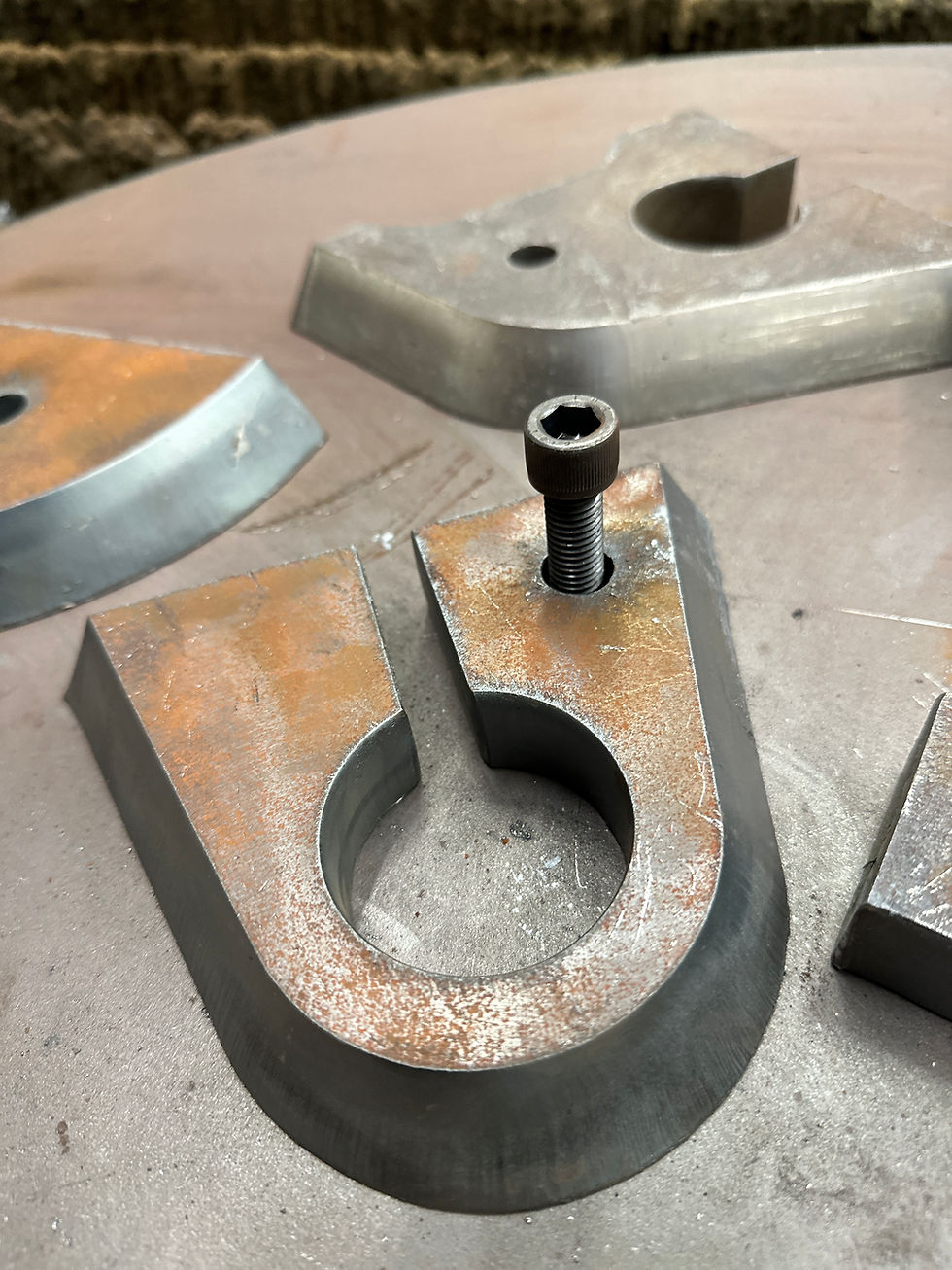
Today’s CNC/Plasma/Laser Field Service Engineer is not a classical car mechanic. He observes systems, detects patterns, and recognizes inconsistencies most people miss (e.g., misaligned screw patterns signaling broken assembly discipline).
Professional Idiocy in Practice – When the System Shoots Itself in the Foot.
The eternal “next version” promise
A known design flaw is marked “to be fixed in the next version” for 6–8 years in a row. The next version never arrives because “there is no budget” or “it’s not a priority this year”. Meanwhile, service teams keep applying the same temporary workaround every month.
Feedback black hole
Service reports are diligently filled out and uploaded to the central system, which R&D, engineering and quality have no access to, no search and sorting function worth using, and no process for reviewing. Formally “everything is documented”, in practice nothing is ever read.
The phantom suggestion box
Seniors are officially allowed to “send suggestions to R&D if they think it’s important” but there is no template, no deadline, no assigned recipient, no tracking, and zero expectation of a reply. It’s permission without a mechanism.
Root cause theate
Every incident requires a formal root-cause analysis (quality procedure demands it), but the same 4–5 root causes appear in 60–80% of reports for years and nothing systemic ever changes. The paperwork is perfect; the product isn’t.
Sales promise vs. service blame cycle
Sales sells “plug & play installation in 1 week” to win the deal. Field reality requires 2–3 weeks of adaptations, waiting for support from office, custom wiring job and other compromises. When the customer complains, service gets blamed for “delays” and “poor execution”, not the promise that was impossible from day one.
All customers are stupid
A repeated failure mode is classified as “user error” for years until a major customer threatens to switch suppliers and suddenly it becomes “engineering to review urgently”.
VIP traveling
Machines sold 12 months ahead with locked dates. Installation plan only 2–3 weeks forward apparently the future ends there. Flights & hotels booked 48–72 hours before departure at 2.5–4× normal price, silently bleeding thousands extra every month while everyone acts like this is normal.
All star team
Leadership says: “We have great team spirit in service”. While 2 out of 3 most experienced sevice team senior people have left in the last 18 months and no exit interviews were ever analyzed.
We are the best
Management proudly announces: “We already know all the problems” said by people who haven’t been on a real customer site in the last 5 years.
Good on paper
Engineers proud of their smart elegant design but never once tried installing it themselves at a customer site under real time pressure.
These 10 are the most universal and painful ones every experienced field service engineer has lived at least 3–4 of them.
Yet OEMs often respond by giving a Senior title with minimal (or no) increase in autonomy, authority, or cross-functional channels.
The function stays execution-only. The title becomes a semantic pacifier.
How IT Solved This 20 Years Ago.
In the early 2000s, IT faced identical scaling pains: restarting services kept systems alive, but didn’t make them reliable.
The solution was structural separation:
Execution roles — restore service quickly
SRE / Systems Engineering roles — analyze recurring failures, architectural weaknesses, and influence design
Google’s SRE model formalized it: those who see production reality must have authority to improve the system.
Industrial OEM service faces the same reality today — but with a 20-year delay.
Field engineers see design debt, configuration limits, and early failures. In IT this became a formal function. In OEMs it is still treated as an opinion.
The ISO Lens: Execution vs. Organizational Function.
ISO 9001 does not care about “Junior” or “Senior” labels. It distinguishes two levels:
Execution competence — repeatable, predictable task performance under defined procedures (operational level).
Improvement function — collecting recurring problems, root-cause analysis, ensuring feedback reaches those authorized to change design, processes, or commitments (clauses on performance evaluation & improvement).
OEMs frequently collapse both into one role because it is cheaper and easier to control. They buy brains but use only hands.
Result: Execution happens. Organizational learning does not.
Documents are created — but not used. The Crispy Bacon case proves it empirically.
When leadership says “R&D will handle it themselves” or “installers should not interfere,” they are choosing vertical control over horizontal learning. ISO sees this as a design flaw: systems without systematic field feedback inevitably repeat failures.
One-Sentence Summary.
OEM organizations confuse execution (controllable) with function (requires trust) — and pay the price in turnover, stagnant products, and rising costs.


Comments